
Savannah Claire Cassis will receive UW’s highest academic honor for graduating seniors: the President’s Medal. During her time as an undergraduate at UW, Savannah worked at I-LABS in Chantel Prat’s lab. She examined resting-state EEGs and working memory for her honor’s thesis on how people perceive the ordering of events. Read the announcement here.
I-LABS researcher Daniel McCloy Receives Prestigious CZI Award

Daniel McCloy is changing the way MEG data is collected and used. Now his open source software improvements to MEG processing and interactive visualizations have been recognized by an award from the Chan Zuckerberg Initiative. Dr. McCloy’s work will continue to enhance MEG research and improve biomedical knowledge in numerous areas. Read the award press release here. Read about the … Read More
I-LABS Co-Director Speaks at National Academy of Sciences Program
The National Academy of Sciences sponsored an online forum to feature innovative science and technology. These ‘micro science talks’ provide quick introductions to cutting edge research. The forum took place on Wednesday, May 20, but it was captured on video too! Watch the event here.
I-LABS Outreach Offers Free Resources – Activities!
I-LABS Outreach continues to create free resources to connect the science and practice of learning. During these uncertain times, it can be helpful to share activities with children. Below are some resources you can download and share. Download a brain coloring sheet. Download a neuron coloring sheet. Download the Caring Across Distance infographic.
Investigating Moral Dilemmas During the Pandemic
I-LABS co-Director Andrew Meltzoff is one of three UW professors leading an investigation into moral dilemmas posed by the Covid-19 pandemic. Using an online virtual lab called LabintheWild, participants from around the world can respond to different situations. Researchers hope to learn how people from different countries and age groups are responding to the crisis. Read about the research here. … Read More
I-LABS STEM Research Showcased by National Science Foundation
A video featuring I-LABS research was part of The 2020 National Science Foundation STEM For All Video Showcase: Learning from Research and Practice. The showcase highlighted efforts to broaden participation and increase access to STEM learning. It brought together some of the most influential STEM researchers and practitioners in the world. From more than 170 videos, I-LABS’ entry was distinguished … Read More
Finding Math Activities
Children can learn important math concepts in everyday situations and through play. I-LABS Outreach develops materials to explain the science behind this process and to offer research-based activities. Learn more about how play supports math learning online. Access the Instagram page and all the Finding Math activities online.
Ashley Ruba Receives American Psychological Association 2021 Dissertation Award
I-LABS alum Ashley Ruba has received a 2021 Dissertation Award for Developmental Psychology from the American Psychological Association. This prestigious award recognizes individuals whose dissertations provide outstanding contributions to the field of developmental psychology. Congratulations Dr. Ruba! Read about the award here. Read more about Dr. Ruba here.
Communication Skills Predict Programming Aptitude
Modern programming languages have vocabulary and grammar, just like natural languages. This observation led I-LABS researcher Chantel Prat and her team to suspect that language skills might be a better predictor than math skills of the ability to learn programming. Her research showed that it was. These findings have profound implications for how programming languages are taught. The research was … Read More
Altruistic Food Sharing in Infants
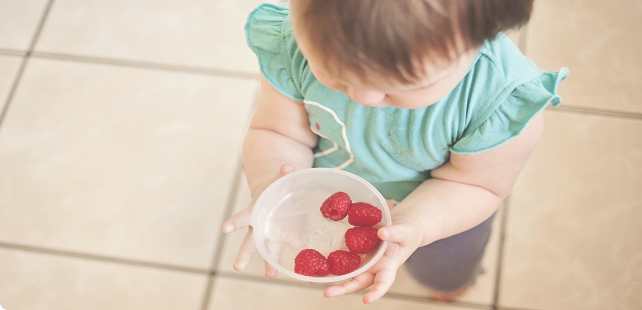
Researchers at I-LABS published a study showing that infants act altruistically, sharing food with unfamiliar people. This is true even when infants are hungry. This behavior demonstrates that infants systematically override their biological drive in order to engage in prosocial, helpful behavior. I-LABS co-authors Barragan, Brooks, and Meltzoff published their work in Scientific Reports (part of the Nature publishing group). … Read More